



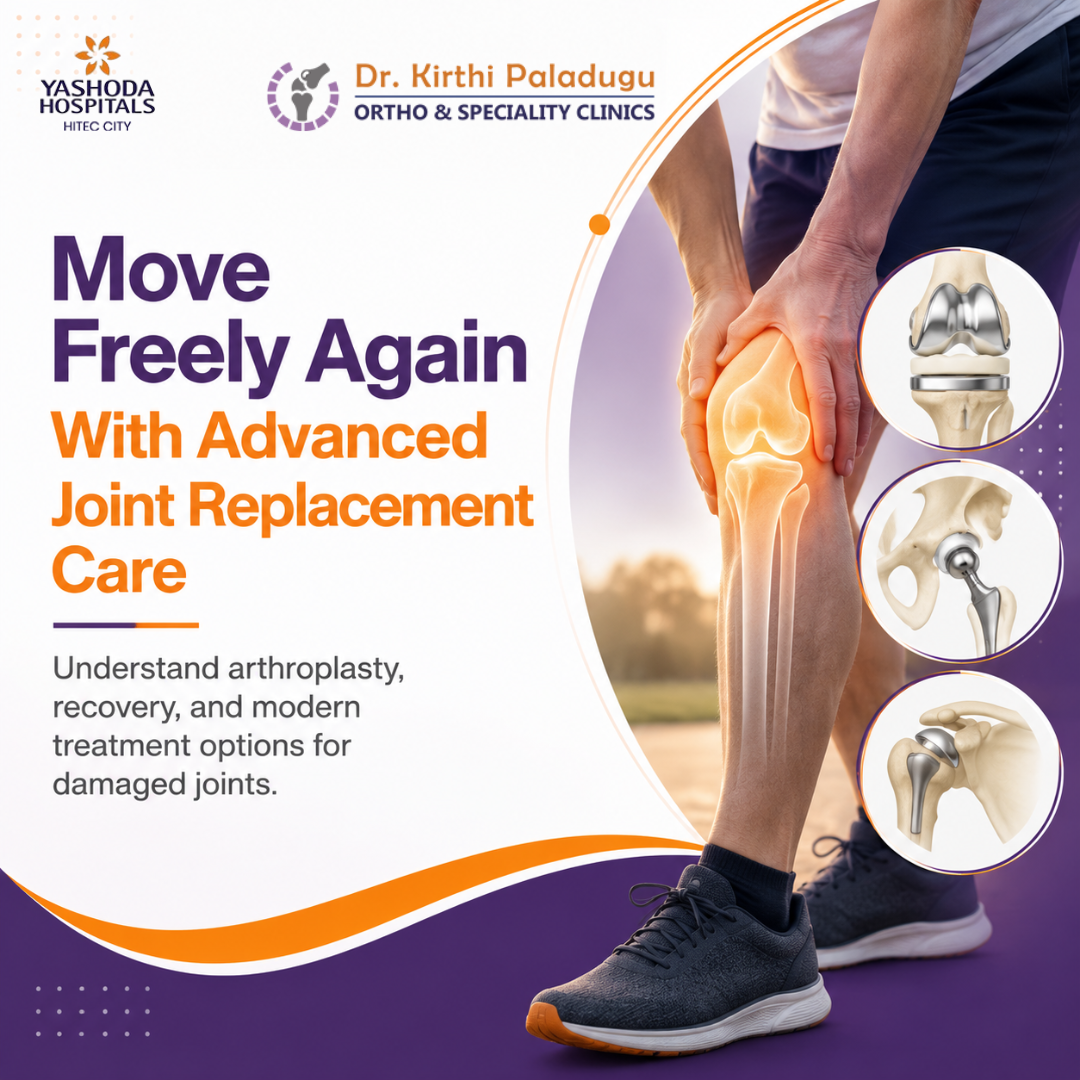
Joint Replacement Surgery: Helping You Move Without Limits
Everyday movements like walking, climbing stairs, standing, or exercising depend on healthy joints. But conditions like severe arthritis, injuries, and age-related joint damage can gradually affect mobility and cause persistent pain.
When medications, physiotherapy, and other non-surgical treatments no longer provide enough relief, joint replacement surgery may help restore movement and improve quality of life.
Dr Kirthi Paladugu specialises in advanced arthroplasty procedures, including knee, hip, and joint replacement treatments designed according to each patient’s condition.
What Is Joint Replacement Surgery?
Joint replacement surgery is a procedure where damaged joint surfaces are replaced with artificial components to reduce pain and improve function.
Also known as arthroplasty, this procedure involves removing damaged cartilage and bone from the affected joint and replacing it with durable implants that allow smoother movement.
The goal of joint replacement is not just pain relief but also helping patients return to daily activities with better mobility and independence.
When Is Joint Replacement Recommended?
Joint replacement may be considered when joint damage becomes severe and starts affecting everyday life.
Common signs that may require evaluation include:
- Persistent joint pain despite medicines or physiotherapy
- Difficulty walking or performing daily activities
- Reduced joint movement and stiffness
- Pain while resting or sleeping
- Swelling and inflammation around the joint
- Advanced arthritis affecting quality of life
A detailed assessment including physical examination, imaging, and medical history helps determine whether joint replacement surgery is the right option.
Types of Joint Replacement Procedures
The type of replacement depends on the joint involved, severity of damage, age, activity level, and overall health condition.
Knee Replacement
The knee is one of the most commonly affected joints due to arthritis and wear-and-tear damage.
Knee replacement surgery involves replacing damaged areas of the knee joint with artificial components to improve movement and reduce pain.
Total Knee Replacement
A total knee replacement is performed when damage affects multiple areas of the knee joint.
Also called total knee replacement surgery or complete knee replacement, this procedure replaces the damaged surfaces of the knee to restore alignment and stability.
Patients with advanced osteoarthritis, severe joint degeneration, or significant knee deformity may benefit from this procedure.
Partial Knee Replacement
A partial knee replacement may be suitable when arthritis affects only one section of the knee while other parts remain healthy.
Unlike a complete replacement, partial knee replacement surgery preserves more of the natural knee structure by replacing only the damaged area.
For selected patients, this may provide a more natural feeling of movement and a faster recovery.
Hip Replacement
The hip joint carries a significant amount of body weight and can become damaged due to arthritis, fractures, or other conditions.
Hip replacement surgery replaces damaged parts of the hip joint with artificial components to reduce pain and improve mobility.
Patients often consider hip replacement when hip pain affects walking, sitting, sleeping, or daily activities.
Shoulder Replacement
Severe arthritis, fractures, or shoulder joint damage can also affect movement and cause chronic pain.
Shoulder replacement involves replacing damaged parts of the shoulder joint to improve function and reduce discomfort.
Robotic Joint Replacement: How Technology Helps
Modern technology has improved the precision of joint replacement procedures.
Robotic knee replacement uses advanced computer-assisted planning and robotic guidance to help surgeons achieve accurate implant positioning.
During robotic knee replacement surgery, the robot does not perform the procedure independently. The surgeon remains in complete control and uses the technology as an advanced surgical aid.
Benefits of robotic-assisted procedures may include:
- Personalised surgical planning
- Improved accuracy during implant placement
- Better understanding of joint alignment
- Advanced monitoring during surgery
Whether robotic surgery is suitable depends on the patient’s joint condition and the surgeon’s evaluation.
Minimally Invasive Joint Replacement
A minimally invasive knee replacement focuses on reducing tissue disruption through specialised surgical techniques.
The goal is to support smoother recovery while maintaining accurate implant placement and proper joint function.
However, the success of any replacement procedure depends more on:
- Correct diagnosis
- Surgical expertise
- Implant positioning
- Rehabilitation
- Patient recovery care
Recovery After Joint Replacement Surgery
Recovery after joint replacement surgery is a gradual process that depends on the type of surgery, overall health, and rehabilitation routine.
Early Recovery
After surgery, patients usually begin:
- Pain management
- Assisted walking
- Joint movement exercises
- Physiotherapy
- Muscle strengthening activities
Long-Term Recovery
With consistent rehabilitation, patients can gradually improve:
- Joint movement
- Walking ability
- Strength and balance
- Confidence during daily activities
Following the rehabilitation plan plays an important role in achieving the best possible outcome after joint replacement surgery.
Benefits of Joint Replacement Surgery
For suitable patients, orthopedic joint replacement can provide:
- Reduced chronic joint pain
- Improved mobility
- Better ability to perform daily activities
- Increased independence
- Improved quality of life
The outcome depends on the patient’s condition, implant selection, surgical technique, and commitment to rehabilitation.
Who Is a Good Candidate for Arthroplasty?
A patient may be considered for arthroplasty when:
- Joint pain significantly affects daily activities
- Conservative treatments are no longer effective
- Joint damage is confirmed through evaluation
- The patient is medically fit for surgery
A personalised consultation helps determine the most appropriate treatment option.
Why Choose Dr Kirthi Paladugu for Joint Replacement?
Dr Kirthi Paladugu is an experienced orthopaedic surgeon in Hyderabad specialising in advanced joint replacement procedures, including:
- Knee replacement surgery
- Hip replacement surgery
- Robotic-assisted joint replacement
- Arthroscopy
- Sports injury treatment
- Trauma care
With expertise in modern joint replacement techniques, Dr Kirthi focuses on understanding each patient’s condition and recommending the most suitable treatment approach.
Every joint problem is different. The right solution depends on accurate diagnosis, careful planning, and personalised care.
Frequently Asked Questions
What is arthroplasty?
Arthroplasty is a surgical procedure that restores joint function by repairing, reshaping, or replacing damaged joint surfaces.
How long does joint replacement surgery recovery take?
Recovery varies depending on the type of surgery, patient health, and rehabilitation process. Many patients gradually return to normal activities over weeks to months.
Is robotic joint replacement better than traditional surgery?
Robotic knee surgery can assist surgeons with planning and precision, but the best approach depends on the patient's condition and the surgeon’s recommendation.
Can joint replacement be avoided?
In some cases, treatments like physiotherapy, lifestyle changes, medications, and activity modification may help manage symptoms.
When joint damage becomes severe and affects daily life, joint replacement surgery may be considered.
What is the difference between total and partial knee replacement?
A total knee replacement replaces damaged surfaces across the knee joint, while partial knee replacement surgery replaces only the affected compartment.
Take the Next Step Towards Better Mobility
Living with constant joint pain can limit your independence and daily activities.
If arthritis or joint damage is affecting your quality of life, an expert evaluation can help you understand your treatment options.
Book a consultation with Dr Kirthi Paladugu to discuss whether joint replacement surgery, knee replacement, hip replacement, or other advanced treatments are suitable for your condition.
📍 Hyderabad
Consult Dr Kirthi Paladugu for Advanced Joint Replacement Care